
Course Brief
The Certificate in AI Competence for Psychological Therapies provides clear, practical and evidence-informed guidance for mental health practitioners who want to understand and use artificial intelligence responsibly in therapeutic work.
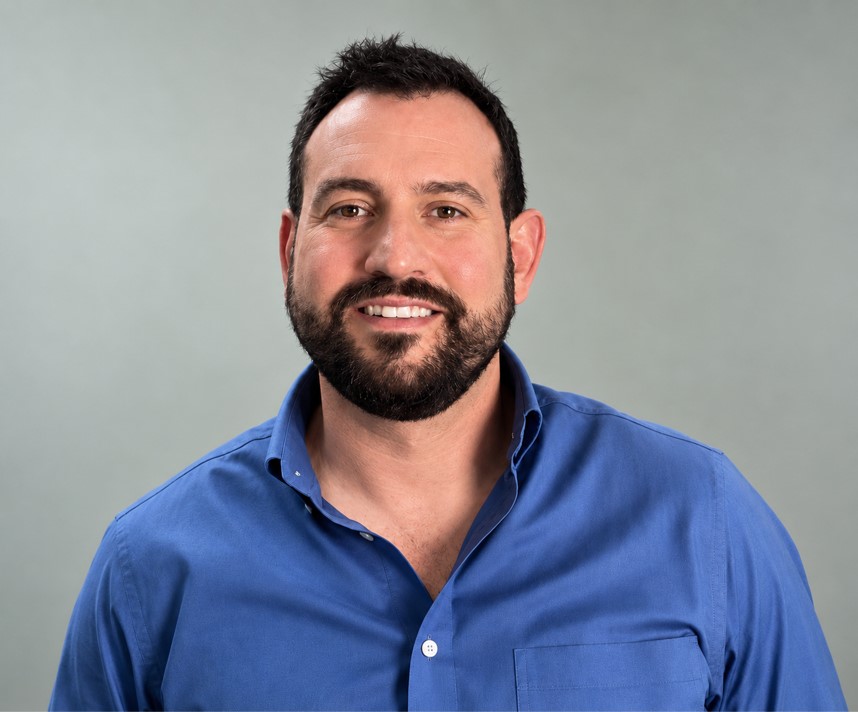
Led by Richard Miller, a counsellor, psychosexual practitioner and AI consultant to the counselling professions, the programme equips participants with the knowledge and practical skills to understand how AI affects clients and clinical practice, assess ethical and data protection risks, and develop a clear plan for responsible use.
Delivered across six concise monthly sessions, the programme combines evidence-informed teaching with practical, hands-on exercises in a secure training environment.
Minimum 12 CPD hours.
This Certificate programme is offered by SDS Seminars in collaboration with Richard Miller. It aims to provide clear, practical and evidence-informed guidance on the responsible use of artificial intelligence in therapeutic work for both experienced and newly qualified mental health practitioners.
The programme consists of six focused monthly sessions, delivered by SDS Seminars and led by Richard Miller. Each session takes the form of a two-hour workshop and includes a hands-on element in a secure training environment, allowing participants to practise using the tools rather than simply hearing about them. Every session concludes with a checklist that participants can use to review their own practice.
Richard authored the AI risk assessment referenced in BACP’s Ethical Framework review and gave evidence to the PCPB Commission on AI in counselling. He is under contract with PCCS Books to write Counselling and AI: A Practical and Ethical Guide and runs the AI Learning Centre.
By the end of the programme, participants will be able to:
- Describe in plain terms what current AI systems do, what they cannot do, and why fluent output is not necessarily accurate.
- Identify how clients are already using AI outside the therapy room and enquire about that use competently and without judgement.
- Recognise the effects of AI use on their own clinical judgement, perception, presence and honesty, and apply practical safeguards.
- Apply data protection, consent and contracting requirements to AI use in line with the BPS Code of Ethics and Conduct and HCPC standards.
- Produce a written risk assessment and AI policy for their own practice that they can present to a supervisor, employer, insurer or regulator.
All Certificate participants will receive free access to regular follow-up meetings held every six months. These meetings are designed to help participants keep pace with this rapidly changing field, address questions arising in practice, and share what is and is not working.
Who This Course Is For
This course is for counsellors, psychotherapists, clinical and counselling psychologists, and other mental health practitioners.
It is suitable both for practitioners who already use AI in their work and want to ensure they are using it safely, and for those who do not use AI but need to understand how their clients, colleagues and employers are using it.
No technical knowledge is assumed. Both scepticism and enthusiasm are welcome, and the course is designed to be useful to practitioners with either perspective.
About the Tutor
Richard Miller is a counsellor and AI consultant to the counselling professions. He authored the AI risk assessment referenced in BACP’s Ethical Framework review, gave evidence to the PCPB Commission on AI in counselling, and has delivered AI training for BACP, NCPS and COSRT.
He is under contract with PCCS Books to write Counselling and AI: A Practical and Ethical Guide and runs the AI Learning Centre.
Richard understands what it is like to approach AI as a practitioner rather than as a technologist. The tools are developing faster than professional guidance can keep pace with, professional bodies are still developing their frameworks, and practitioners are often left to make decisions without training or precedent.
The most recent survey evidence shows that AI use among therapists has tripled in eighteen months, that more than a fifth use it for clinical suggestions, and that around two-thirds have received no training in its use.
This course will not tell participants whether they should use AI. Instead, it will provide the knowledge they need to make informed decisions, the skills to use these tools without being misled by them, and written evidence of their reasoning that they can present to anyone who asks.
This course is built around six two-hour modules. Each module will be delivered live on Zoom and will also be available as a recording.
All live sessions will run from 12.00 pm-2.00 pm UK time:
- Session One: 12 January 2027
- Session Two: 16 February 2027
- Session Three: 23 March 2027
- Session Four: 27 April 2027
- Session Five: 1 June 2027
- Session Six: 29 June 2027
Session One | What AI Is and What It Is Not
To use a tool safely, we need to understand its nature and function. To build a solid foundation, this module begins by defining what AI is, how it is made, and what its capabilities and limitations are.
This jargon-free introduction explains what large language models actually do and why fluency and accuracy are not the same thing. It considers the current state of the field and its rate of change.
This introductory session is suitable both for people who regularly use AI and for those who have never used it. It ends with supervised use of an AI tool so that every participant has an opportunity to try it before the next session.
Session Two | AI in the Lives of Our Clients
This session investigates how clients are using AI and the effects this is having both on them as individuals and on how they present in the therapy room.
It considers what emerging evidence tells us about AI use among clients, including both adaptive and maladaptive patterns of use, and what practitioners can do to account for the presence of AI in assessment and ongoing treatment.
Session Three | How AI Use Shapes Our Practice
While many practitioners report favourable experiences of using AI, many also have concerns about becoming reliant on it.
In this session, participants will identify their own views on AI in therapy and begin planning how to use it ethically. The session covers techniques for making effective use of AI while reducing the risks it presents, not only to confidentiality but also to hard-earned professional skills.
Session Four | Good Practice, Data Management and Consent
This session examines different perspectives on good practice in AI and provides practical guidance on how to introduce its use to clients, including how to seek informed consent.
Participants will map their intended use of AI and practise conducting risk assessments of a range of AI tools that may appeal to therapists.
Session Five | AI in Your Practice: A Simulated Session
This session demonstrates what AI can appear to do in the therapy room.
Participants will act as therapists with an AI client and experience the role of a client with an AI therapist. This experiential exercise is designed to provide a first-hand understanding of the appeal, strengths and limitations of AI for therapists and clients.
The session also explores how AI can alter how clients prepare for and present in therapy sessions.
Session Six | Planning for the Future, Policy and Action
Drawing together what has been learned in the previous sessions, participants will create their own policies and action plans, including contract templates, confidentiality statements and consent forms.
By the end of this session, participants will have acquired the knowledge needed to be technically informed and ethically aware, enabling them to integrate AI use safely into their everyday practice.
This Certificate can only be taken in full.
If you have missed the first few modules, you can still book the Certificate and complete those modules using the recordings.
All Certificate participants will receive FREE access to regular follow-up meetings held every six months. These meetings are designed to help participants keep pace with this rapidly changing field, answer questions arising in practice, explore new areas of AI use and address the challenges of using AI responsibly in therapeutic work.
Course Tutor
Richard is an accomplished therapist and educator with a strong academic background in humanistic psychotherapies and psychology. He holds professional membership with both BACP and BPS, and has also contributed to contemporary mental health practice as a digital and AI consultant for the BACP Ethical Framework Review.